














Weaving Tales: Korvai Kanjivaram Sarees and Borderless Modernity
Explore the timeless elegance of Korvai Kanjivaram Sarees and the modern appeal of Borderless styles in this tale of tradition meeting contemporary grace.

In the realm of handwoven luxury, few garments capture attention like the Silver Kanjeevaram Saree. Known for its understated elegance and subtle sheen, this variation of the traditional Kanjeevaram reflects a more refined, modern aesthetic. Unlike the classic bold gold tones often associated with traditional South Indian silks, the silver hue introduces a cooler, contemporary element. Crafted through centuries-old weaving traditions, it showcases not just beauty but the evolving preferences of wearers who seek sophistication with cultural depth. This evolution is not a departure from heritage but rather a redefinition of itwhere minimalism and opulence meet.
The Legacy of the Kanjivaram Weave
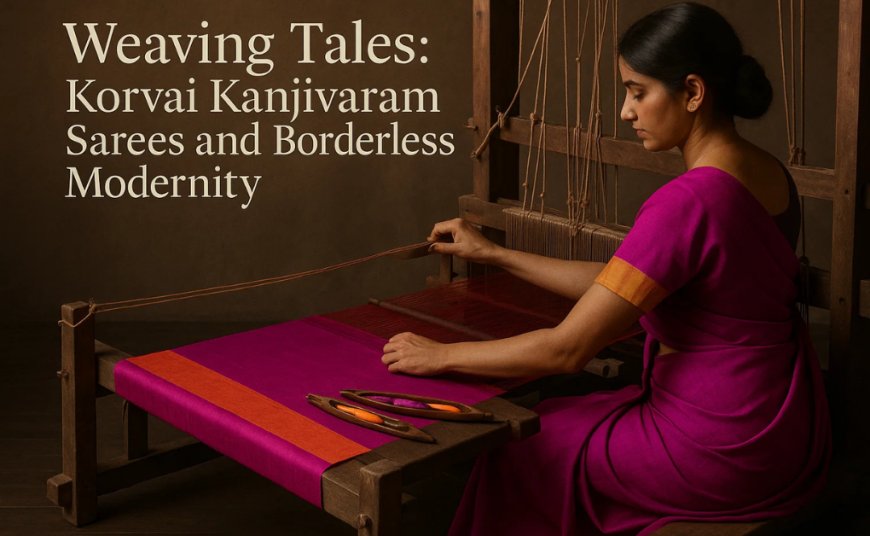
Kanjivaram sarees, traditionally woven in silk with intricate motifs, have always been a symbol of grandeur and tradition. Known for their rich colors, contrast borders, and thick texture, these sarees have long been favored for ceremonial wear. The weaving style is unique, involving the interlocking of three separate threadsthe body, border, and palluoften using intricate techniques that require skilled craftsmanship. Over time, different forms and interpretations of these sarees have emerged, each reflecting regional nuances and design sensibilities.
Among these, the Korvai style has held a special place. Known for its distinct contrast borders and labor-intensive weaving process, it emphasizes structure and heritage. The weaver meticulously joins the body and the border using a technique that creates a sharp color division. Its not merely a sareeit's a visual narrative that celebrates bold contrasts and structural finesse.
Korvai Kanjivaram Sarees: Strength in Structure
Korvai Kanjivaram sarees are easily identifiable by their bold, contrasting borders and the clarity of their craftsmanship. These sarees are woven with a separate shuttle for the borders and body, making the contrast stark and clean. It is this clear delineation that lends the saree its powerful appeal.
The motifs found in these sarees are often drawn from temples, nature, and cultural symbols. Peacock feathers, rudraksha beads, mango patterns, and temple designs are commonly featured, all woven using traditional jacquard or handweaving methods. The grandeur of Korvai lies in this intricacyeach saree can take several days to complete, with artisans often spending hours ensuring each join is flawless.
What makes the Korvai weave so revered is its ability to remain timeless while also adapting to newer interpretations in terms of color and fabric. Even as preferences evolve, the structural integrity and artistic richness of these sarees continue to command admiration.
The Rise of Minimalist Elegance
As design sensibilities shift toward cleaner lines and minimalistic styling, sarees too are experiencing a transformation. Enter the Borderless Kanjivaram Saree, a modern take that ditches the traditional contrast borders for a more seamless, uniform appearance. These sarees appeal to wearers looking for something subtle yet rooted in tradition. Without the visual separation of body and border, the attention turns to texture, tone, and weave patterns, which often feature fine geometric or floral elements woven into the fabric itself.
This evolution is not accidental. The growing demand for elegant, understated ethnic wear has led to a rise in sarees that bridge the gap between heritage and contemporary style. The lack of borders allows these sarees to flow more fluidly, offering a softer silhouette and a less rigid appearanceperfect for occasions that call for graceful simplicity.
Tradition and Modernity in Harmony
Whats remarkable is that both these saree stylesKorvai and Borderlessstand not in opposition but in balance. One speaks to the heritage of bold contrast and structured form, while the other whispers of modern minimalism and seamless draping. Together, they reflect the dual nature of today's fashion landscape, where tradition is not lost but reshaped.
Women today might own a meticulously crafted Korvai piece for weddings and ceremonies and a more fluid borderless variant for formal dinners or celebrations. The versatility of both styles ensures that they are not just garments but expressions of identity. One emphasizes roots; the other highlights evolution.
Beyond Fabric: A Symbol of Cultural Dialogue
In many ways, these sarees are more than just textilesthey are stories. The Korvai weave speaks of ancient temples, heritage looms, and regional pride. The borderless version, meanwhile, speaks of innovation, global sensibility, and a changing perspective on tradition. Both are expressions of artistry passed down through generations, carried on the shoulders of skilled weavers who adapt while honoring their craft.
This duality resonates with a broader cultural movementwhere preserving the past doesnt mean resisting the future. In fact, both saree forms coexist to serve different moods, occasions, and personal aesthetics. Whether worn with temple jewelry or minimal contemporary pieces, both styles have their place in the modern wardrobe.
Conclusion
. It is a canvas of shifting identities, a thread that binds tradition to the present, and a celebration of craftsmanship in all its forms. Whether structured or seamless, each weave tells a storyof place, purpose, and personal style. And in every fold, a piece of history lives on, beautifully reimagined for today.