

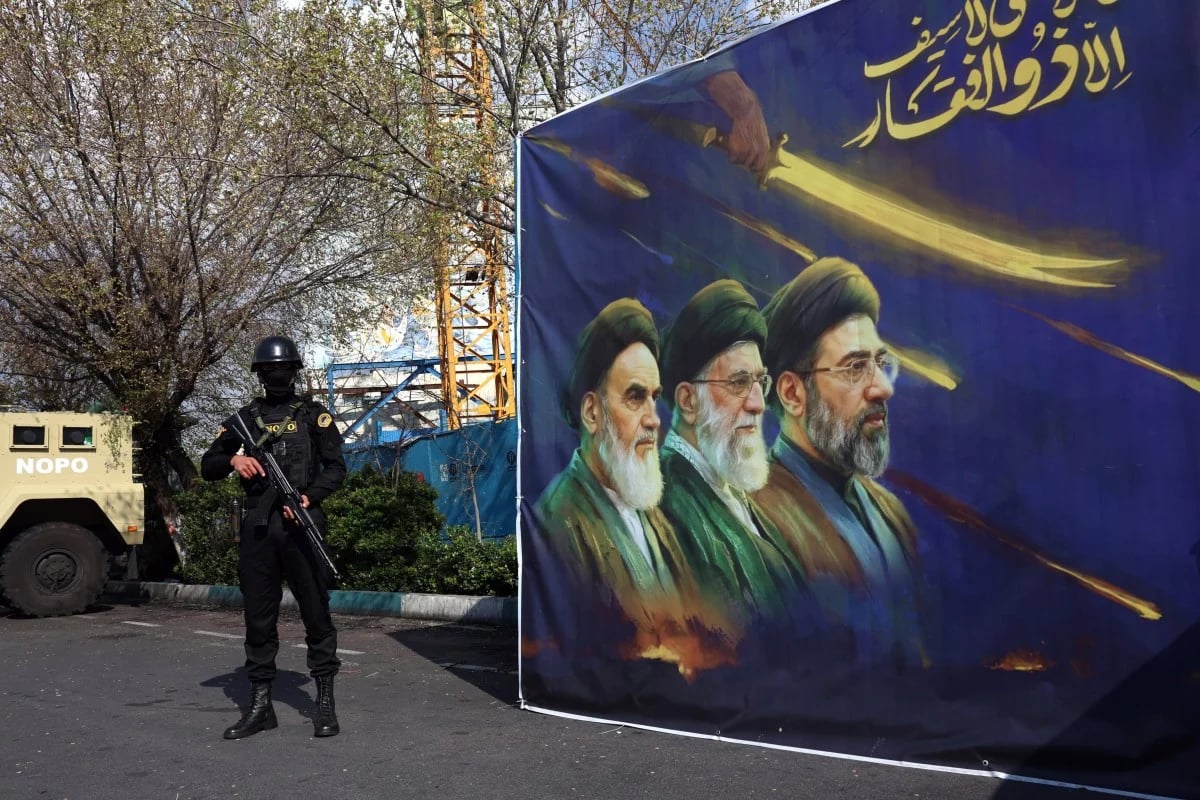
The ongoing conflict involving the United States, Israel, and Iran has reached a critical point, with Iran’s Islamic Revolutionary Guard Corps (IRGC) issuing a stark ultimatum to a list of 18 prominent American tech companies. This warning comes amid accusations that these firms are significantly involved in the high-tech warfare that has reportedly led to the deaths of Iranian officials.
Beginning at 8:00 PM Tehran time on April 1, the IRGC has declared that it will target these companies, which include major players such as Apple, Google, Microsoft, and Meta, among others. In a statement, the IRGC emphasized that for every assassination occurring in Iran, they will retaliate against the relevant corporate entities. They urged employees of these companies to vacate their workplaces immediately to safeguard their lives.
The List of Targeted Companies
The IRGC has identified these firms as critical elements in tracking and identifying targets for US and Israeli operations. The comprehensive list encompasses nearly every significant name in the technology sector, spanning various industries including aerospace and finance. The companies named by the IRGC are:
- Big Tech: Google (Alphabet), Microsoft, Apple, Meta.
- Chips & AI: Nvidia, Intel.
- Infrastructure & Cloud: Oracle, HP, IBM, Cisco, Dell, Palantir.
- Transport & Energy: Tesla, Boeing.
- Finance: J.P. Morgan Chase, GE.
- Regional Players: G42 (UAE AI firm), Spire Solutions (Dubai-based).
The IRGC's rationale is grounded in their assertion that these companies are now deemed combatants in this conflict, as they provide the technology used in surveillance and targeting operations. They stated, “Since the main element in designing and tracking terrorist targets are American and ICT [Information and Communications Technology] and AI companies… from now on, [these] main institutions will be our legitimate targets.”
This aggressive stance follows a tumultuous period for Iran, with reports indicating that numerous high-ranking officials have been killed since the conflict began on February 28. Tehran contends that these targeted assassinations have been facilitated by advanced surveillance and AI technologies supplied by the accused companies. The IRGC reiterated their warning, stating, “These companies should expect the destruction of their respective units in exchange for each terror act in Iran, starting from 8 PM Tehran time on April 1st.”
In light of these threats, there have been unconfirmed reports suggesting that Iranian drones may have already targeted Amazon Web Services data centers located in the UAE and Bahrain. This raises significant concerns about the resilience and security of the region’s digital infrastructure against potential physical attacks.
As tech companies scramble to implement contingency plans, many are advising their staff to work remotely to ensure safety. The geopolitical landscape continues to shift, with indications that US President Donald Trump is advocating for diplomatic solutions while simultaneously issuing threats to “obliterate” Iran’s energy sector if negotiations are not successful by April 6.
While the credibility and immediacy of the IRGC's threats remain uncertain, security analysts are closely monitoring the situation, aware of the potential implications for both regional stability and international relations. The evolving conflict underscores the intersection of technology and warfare in modern geopolitical disputes.
For more insights into how emerging tech threats are reshaping global security frameworks, follow our coverage on advancements in quantum computing and its implications for encryption.
Source: TechRepublic News